
-extra_large.jpg&w=3840&q=75)
Manal Saleh
Minister of Finance and Chairman of FSDP
underlines Kingdom's financial sector resilience and ability to support
new markets
- Opening day sees major fintech
announcements as Tabby unveils Series F funding round at USD 6.5 billion
valuation and Silq announces SAR 500 million partnership with Joa Capital
Riyadh, Saudi Arabia – 14
September 2026: Money20/20 Middle East
officially opened in Riyadh on Monday, bringing together senior Saudi
government officials, global financial leaders, investors, policymakers,
financial institutions, fintech innovators and technology companies, at the Riyadh Exhibition & Convention
Centre in Malham. The opening day placed Saudi Arabia at the centre of global
conversations around the future of financial services, with leaders from across
the public and private sectors discussing investment, innovation, financial
infrastructure and the partnerships needed to support the industry's next phase
of development.
H.E.
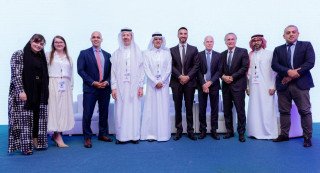
Mohammed Al-Jadaan, Finance Minister and Chairman of the FSDP Committee,
Kingdom of Saudi Arabia, officially inaugurated the second edition of
Money20/20 Middle East and was given a tour of the event, alongside other
senior Saudi officials, who used the opening day to outline the priorities
shaping the Kingdom's financial sector and the progress being made across
fintech, investment, digital infrastructure and financial innovation.
The
2026 edition is expected to welcome more than 38,000 attendees, alongside over 350
exhibiting brands, 390 speakers, more than 600 investors and 150 startups over
the next three days.
Hosted by the Financial
Sector Development Program (FSDP), Saudi Central Bank (SAMA), Capital Market
Authority (CMA) and Insurance Authority (IA), and co-organised by Fintech Saudi
and Tahaluf, Money20/20 Middle East brings together the global money ecosystem
in Riyadh through a programme focused on the developments reshaping finance
across Saudi Arabia, the region and international markets.
H.E. Al-Jadaan delivered
the opening keynote, in which he outlined the next chapter for Saudi Arabia's
economic transformation. The Minister said Saudi Arabia's goal is to continue
innovating while remaining disciplined; open to opportunities while maintaining
appropriate oversight; and quick to adopt technology without compromising
stability.
H.E. Minister of Finance Mr. Mohammed Aljadaan,
Chairman of the Financial Sector Development Program said:
"Saudi Vision 2030
has helped expand financing and investment channels, and enabled a more
flexible legislative environment for the fintech sector. As the Vision enters
its third phase, the focus shifts to sustaining the impact of economic
transformation and building on the gains of this new growth. Our direction is
clear: to build a deeper, more competitive financial sector that keeps pace
with the evolution of the Saudi economy, empowers the private sector, attracts
investment, and expands opportunities. We have opened the door to new financial
business models and technologies that have strengthened the sector's ability to
adapt to changing conditions and support the economy efficiently. In times like
these, the strength of the financial sector isn't measured by its size or pace
of growth alone, but by its ability to adapt and keep operating under a range
of conditions. None of this is complete without the human talent capable of
developing these technologies and managing their risks."
He outlined the Ministry's focus on sustaining the impact of the
Kingdom's economic transformation and translating new growth opportunities into
more efficient markets, more dynamic capital flows and a stronger financial
sector, while highlighting the resilience Saudi Arabia's financial system has
demonstrated amid changing global economic conditions.
The opening day also saw a
series of announcements demonstrating the pace of investment and collaboration
across the financial services ecosystem. Regional payments app Tabby announced
a Series F funding round at a USD 6.5 billion valuation, which it says has
allowed it to secure consumer financing and build teams to service customers
across much more of their financial lives.
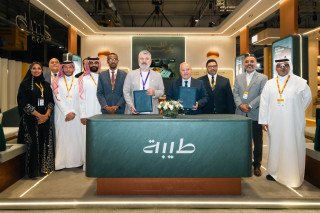
Meanwhile,
Silq and Joa Capital announced a SAR 500 million partnership that will enable
Silq, which currently serves more than 50,000 SMEs, to support even more
start-ups and small businesses with access to working capital and financing.
Beyond the day's announcements, discussions across
the programme examined how financial systems can continue to innovate and scale
while maintaining stability. In a session titled ‘Designing Financial Systems
that Scale Safely,’ a panel of global experts discussed the importance of
balancing innovation, competition and systemic stability.
Turky A. Kabarah, Director of Fintech Enablement Financial
technology, Saudi Central Bank (SAMA), said regulations are not a barrier to innovation, but rather
encourage it, explaining: “We do not view regulatory requirements as barriers
to innovation, but as a roadmap that enables fintech companies to innovate and
scale safely. By testing new business models in a controlled environment, we
can better understand their risks, develop appropriate frameworks, and maintain
trust and stability across the financial system.”
Fellow panellist Balaji Rajagopalan, CTO at the State Bank
of India, added that stability and customer use must be at the forefront
when designing any financial system. He said: “Financial services must be
designed around the customer, with security and protection embedded throughout
the entire journey. As technologies such as AI become increasingly integrated
across the financial ecosystem, resilience cannot be treated as an
afterthought; it must be built into technology, processes and governance from
the outset.”
The future of sovereign money was also discussed
during a panel titled “Deep Dive: Designing Sovereign Money – Inside CBDC
Architecture.” The panelists agreed that there is a need for digital currencies
designed by central banks in markets where cash payments still dominate. The
discussion also touched on how digital currencies may well be used by machines,
rather than humans.
Dr Saeeda Jaffar, Managing
Director at International, Circle, said: "The use of
digital assets, digital currencies for the digital world is an incredible use
case. It is happening. Already there are bots out there that are making many,
many transactions. There are no payment rails that can handle that as well as
digital currencies."
The scale and diversity of the opening day reflected Money20/20 Middle
East's role as a meeting point for the global financial ecosystem, bringing
institutions, investors, regulators, fintech companies and technology leaders
together in Riyadh.
Mike Champion, CEO of
Tahaluf,
said: "Money20/20 Middle East is bringing an incredible mix of people
to Riyadh. We have the major financial institutions, regulators, investors,
fintechs and some of the most exciting companies in the sector all here at the
same time. Saudi Arabia is a market people want to understand and be part of,
and there is a huge amount of opportunity here. Over the next three days, we
want to see people meeting the right partners, finding investment, doing
business and hopefully starting conversations that continue long after the
event. That is ultimately why we bring the industry together at this
scale."
Money20/20 Middle East
continues at the Riyadh Exhibition & Convention Centre in Malham through 16
September, with further announcements, investment activity and industry
discussions expected across the remaining two days.
Registration and further
information are available at www.money2020middleeast.com.
– Ends –
About Money20/20
Middle East
Money20/20 Middle East is the region’s home for the global money
ecosystem a platform that unites regulators, banks, fintechs, investors, and
technology innovators to accelerate the future of financial services. Through
world-class content, high-impact networking, and landmark announcements, the
event positions Saudi Arabia at the heart of global fintech innovation.
About Money20/20
Money20/20 is the world’s leading premium content, sales, and
networking platform for the global money ecosystem, with flagship shows in
Amsterdam (Europe), Las Vegas (USA), Bangkok (Asia), and Riyadh (Middle East).
Part of Informa, Money20/20 is where the industry’s smartest visionaries and
innovators come together to create the future of money. In 2025, Money20/20
Middle East was recognised as Best International Show Middle East at the AEO
Excellence Awards, reflecting its growing influence and impact on the global
fintech landscape.
About Tahaluf
Tahaluf is a leading events company in Saudi Arabia, delivering
world-class platforms that ignite innovation across key global industries.
Through flagship events such as LEAP, Black Hat MEA, and Money20/20 Middle
East, Tahaluf connects global experts, visionaries, and organisations to shape
the future through collaboration, creativity, and technology.
-large.jpg)
-large.jpg)




كن أول من يشارك رأيه
ابدأ النقاش حول هذه القصة.